The Foundation of Real Nourishment
- mastoic
- May 8
- 3 min read
Before Advanced Nutrition, There Are Basics
Before advanced nutrition, there are basics.
Before trends, there is nourishment.
Before complicated food rules, there are staple foods that have sustained households, workers, families, and communities for generations.
Real nourishment does not need to begin with perfect meal plans, extreme diets, or endless rules. Often, it begins much more simply: with a kitchen built around reliable foods.
Bread made with real ingredients. Simple carbohydrates that fuel daily life. Homemade foundations. Meals that satisfy properly. Foods that reduce the need for constant snacking.
Many people drift nutritionally because their kitchen lacks dependable staples. When there is nothing substantial to eat, convenience becomes the easiest option. When real food is already available, better choices become much easier.
This is the foundation.
Staple Foods Create Stability/The Foundation
A strong kitchen often contains simple, dependable foods:
Quality bread, rice, potatoes, eggs, proteins, vegetables, fruit, fermented foods, herbs, and seasoning.
These foods are not glamorous.
They are reliable.
And reliable often changes lives more than dramatic does.
Many people do not need more nutrition information. They already know that poor food choices repeated daily create problems. They already know sleep, movement, and stress matter. They already know what usually helps them.
What is often missing is structure.
Without structure, hunger becomes impulsive. Stress drives decisions. Convenience wins. Weekends undo weekdays. Motivation becomes unreliable. Old habits quietly return.
The answer is not obsession.
It is a workable system.
Eating During The Reset/Real Nourishment
The Real Reset approach is built on clear standards:
Eat real food. Remove what clearly harms you. Simplify decisions. Create rhythm around meals. Use fasting intelligently. Eat enough to feel stable. Repeat what works. Avoid unnecessary food drama.
This is not punishment.
It is recalibration.
Rule 1 — Eat Real Food First
Use real food as the default standard.
A simple question can guide most choices:
The Foundation of Real Nourishment
If yes, it probably belongs. If no, question it.
Real food includes things like eggs, chicken, beef, lamb, fish, Greek yogurt, lentils, beans, potatoes, rice, oats, fruit, sourdough, wholemeal bread, roti, leafy greens, carrots, onions, tomatoes, peppers, cucumber, leeks, broccoli, olive oil, avocado, nuts, seeds, tahini, and sensible amounts of butter.
These foods are simple, recognisable, and useful.
They support energy, recovery, appetite, and daily rhythm.
The Foundation of Real Nourishment Starts With Staple Foods
Rule 1 Starts With Staple Foods
Some foods deserve more caution.
Sugary drinks. Candy. Ultra-processed snacks. Engineered convenience foods. Habitual desserts. Constant takeaway meals.
Real life is imperfect. Nobody eats perfectly all the time.
But standards matter.
The goal is not to become obsessive. The goal is to stop letting low-quality food become the default.
Rule 2 — Remove the Obvious Problems
During a reset period, it helps to reduce or remove the habits that clearly weaken stability.
That may include binge alcohol habits, nicotine dependence where possible, late-night eating, mindless grazing, reward-food cycles, and eating while constantly scrolling.
This creates space.
Space for appetite to regulate. Space for awareness to return. Space for better decisions to become easier.
Rule 3 — Use Lifestyle Fasting Real Nourishment
Fasting is not only about food.
It can also mean stepping away from habits that weaken you.
Less scrolling. Less grazing. Less stimulation. Less impulse.
More awareness. More rhythm. More structure. More stability.
Food is not separate from the rest of life. It affects energy, focus, mood, recovery, and discipline.
A reset does not require perfection.
It requires better foundations.
Real food. Simple systems. Repeatable meals. Clear standards.
That is where nourishment begins.
The Real Reset Course is a 30-day practical system for rebuilding structure, reducing chaos, and strengthening trust with yourself through action.
Start where you are. Use what you have. Keep going when it feels ordinary.
Real food. Simple systems. Repeatable meals. Clear standards.
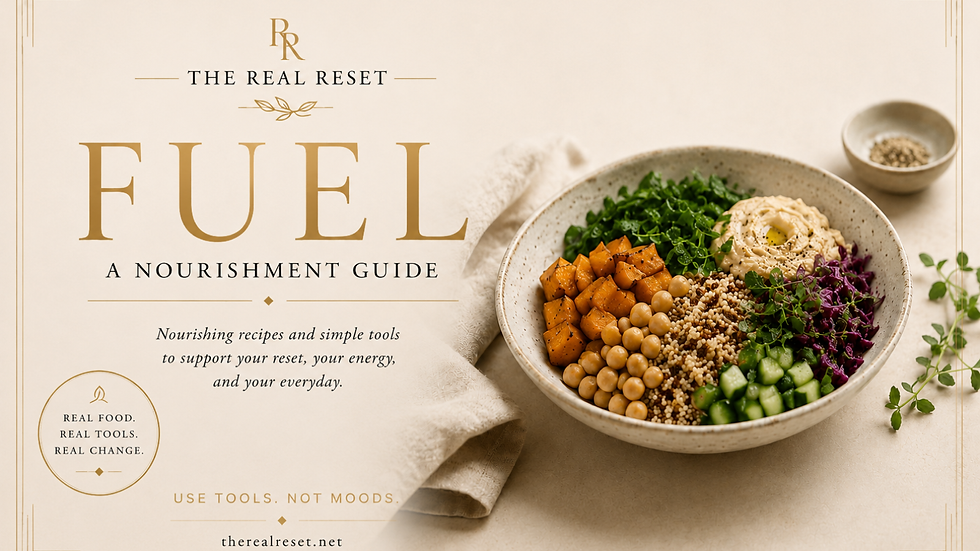
FUEL makes sustainable kitchens easy for the modern life

Comments